Thursday, July 9, 2009

From Rome to Sorrento

After leaving Rome, we headed for a ridiculously cool hostel, 7 Hostel, in Sant'Agnello and used it as home base for branching out to the beaches of Amalfi, the streets of Sorrento, and the grottos of Capri. The view from the rooftop terrace was spectacular...


Nearby Sorrento was a very pretty city with lots of nice shops and probably the best gelato we encountered on our trip - and we would know, b/c not a day went by that we didn't try a new gelato flavor.


Here's Laura in Sorrento's Lemon Grove Garden, where tourists can walk and admire the hulking lemons hanging from the trees before gladly accepting free samples of limoncello. (Good stuff, trust me.)

Roman Arches

Inside the Roman Forum there is the marble Arch of Titus, which was constructed to commemorate the Roman defeat of the Jews in the Jewish War or Great Revolt. It began in A.D. 66 and stemmed from the Jews' monotheistic beliefs not meshing with the Romans' paganism (that... and taxation). The Arch of Titus contains scenes of the Roman siege of Jerusalem (see below). One particularly striking image is of soldiers carrying a Menorah from the destroyed Second Temple.


Meanwhile, right outside the Coliseum sits the Arch of Constantine, which marks the victory of Emperor Constantine over his rival Maxentius at the Battle of Milvian Bridge in A.D. 312. Before Constantine took control, Christianity was persecuted; after, there was a preference for it. As Rick Steves says in his book, "If you are a Christian, were raised a Christian, or simply belong to a so-called Christian nation," Constantine's preference has had an impact on you. (After all, when you rule an empire like this, you hold some sway.)

Roman Forum


From walking on the same stone streets as gladiators to seeing the very location of Julius Caesar's funeral pyre to exploring the remains of pagan temples and government buildings, visiting the Roman Forum was like living history. Unfortunately, good pictures from the experience seem to be few. But rest assured, you need to go. Now.


This is the Temple of Antoninus and Faustina, dedicated to the deified emperor Pius Antoninus and his wife, Faustina the Elder.


Here I am in front of the Temple of Vesta, named for the goddess of the hearth, Vesta. Wikipedia says it was used as a storage location for Senate documents.

Wednesday, July 8, 2009

Laura's Triumphant US Return

Laura said "Tot ziens!" to the Netherlands this morning as she boarded a plane at Schipol Airport for the very last time, this time US-bound. She'll land in a country decidedly different than the one we left; after all, there's a new president, a ruined economy, a news media that has become strangely obsessed with the goings-on in Alaska (of all places), and an 1800% increase in airplay of Michael Jackson.

It's summer holiday time here in The Netherlands, so the airport - particularly the gates associated with the Dutch airline, KLM - was absolutely packed with happy travelers ready for rest and relaxation. Unlike most European airlines, KLM relies on self check-in kiosks, which would be efficient - if we weren't in Europe.

After all, asking Europeans to use self check-in kiosks is like herding cats through a yarn store. To see something so simple blow the minds of otherwise seemingly functional adults - many with seemingly functional children in tow - was an entertaining if not bizarre site indeed. It was as if KLM had dropped them on the surface of Mars and asked them to find the location of the Phoenix lander using a map of Vancouver - while blindfolded.

Consider this brief conversation, which I swear I have not made up:

Cheery KLM attendant: "Do you already know how to use the self check-in?"
Us: "Uh...Yeah."
KLM attendant: [Suddenly less cheery but noticeably relieved] "Oh, thank GOD!"
Us: [Stunned look.]
KLM attendant: "It's as if everyone has left for vacation without their brains!"

I'm still surprised she didn't hug us.*

*In defense of my European brethren, I can say that the KLM check-in machines required a stunning amount of information to find a reservation: name, confirmation #, e-ticket #, passport #, airport route, number of bags, seat location, shoe size, political affiliation, bench press max, and favorite Michael Jackson song. (I felt that the last one was an invasion of privacy.)

Tuesday, July 7, 2009

Water Fountains


We've been all over Europe and have seen that the probability of finding a public drinking fountain is similar to that of winning the lottery or encountering alien life. (Drinking water in that way would be so uncivilized, after all.)

Well, Rome is an exception. In Rome, they don't just have public drinking fountains, they have public drinking fountains - the kind where the water is spouted from a childen's mouth, or a stone jug, or a Greek goddess, or some such thing. I guess we can thank the original Romans for that.

It was, as they say, refreshing.

Monday, July 6, 2009

The Roman Coliseum

Enormous and imposing on the outside, but just intimate enough for blood sport on the inside, the Roman Coliseum was as awesome as we had hoped. We spent one of our mornings in Rome exploring its innards and imagining the many gladiatorial contests that took place there.


The Coliseum was constructed starting in the 1st century AD and has stood through the ravages of fires, earthquakes, and pillagers. The south side nose bleed seats, for instance, fell to an earthquake in 1349. However, Bill Bryson notes in his book Neither Here Nor There that "the coliseum isn't the hulking ruin that it is today because of the ravages of time, but because for hundreds of years people knocked chunks from it with sledgehammers and carted them off to nearby lime kilns to turn into cement."

One of the most interesting things about the Coliseum interior was a look at the hypogem, or the underground tunnels beneath the now non-existent arena floor. It was from these passages that animals were hoisted into the arena through trap doors.


You can see more pictures of the Coliseum at Flickr.

Thursday, July 2, 2009

Roma: Trevi Fountain and the Spanish Steps

When in Rome, do as the Romans (and the hordes of fellow tourists) do...and at night, that means visiting either Trevi Fountain or the Spanish Steps.

Trevi Fountain is a beautiful and massive Baroque fountain in Rome that is a good place for getting badgered to buy worthless tourist swag and also a particularly interesting place to be on the eve of the Champions League final. We took our pictures while listening to Brits/Scots and Spaniards exchanging cheers for their teams. (Barcelona won.)


Meanwhile, the Spanish Steps are also a nice place where people go to sit, socialize, and watch others. (However, this fact from Wikipedia is revealing of their tourist credentials - they're right next to the site of the very first McDonald's in all of Italy.) The top - near the obelisk - provided more nice views of soccer fans waving their banners and sporting their jerseys.


More pictures from Rome are of course on Flickr, though there's more posts to come.

Monday, June 29, 2009

Firenze (Florence)

On May 19th, we made our way from the beautiful Cinque Terre to the birthplace of the Renaissance - Firenze (Florence), Italy. It was hard not to like a city that sports a view like this:


On the far right you see the dome of the Florence Cathedral (Basilica di Santa Maria del Fiore), which was the work of Filippo Brunelleschi. The brick dome was a monumental accomplishment at the time (1436) and served as a primary inspiration for Michaelangelo when designing St. Peter's Basilica in Rome. Below is a picture of the Duomo's facade.


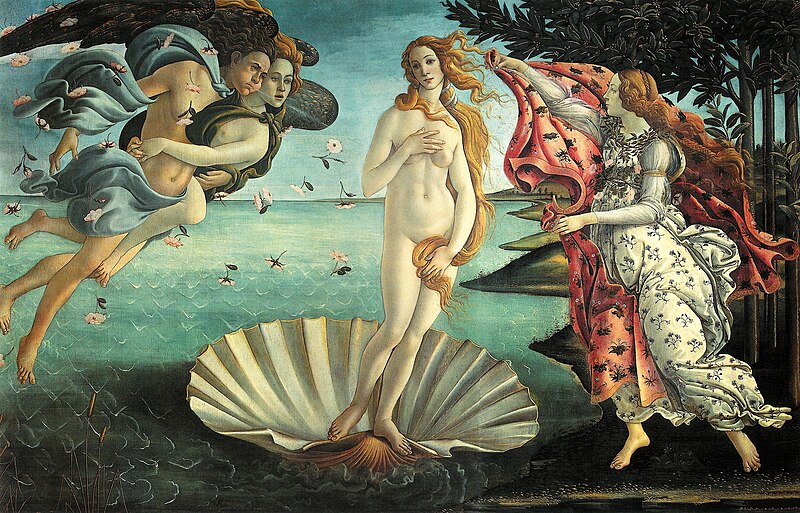
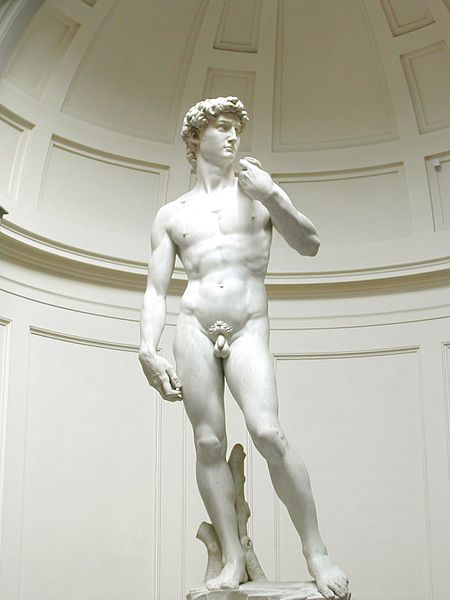
Florence is known for its museums, and we were not disappointed with the amazing works at the Uffizi Gallery and the Accademia. At the former, we were thrilled to see Botticelli's Birth of Venus. Meanwhile, at the Accademia, the main attractions are Michaelangelo's Prisoners, and more importantly, David. We've been disappointed with some famous pieces of art - the Mona Lisa, most notably - but David is more than deserving of the hype. It was magnificent.

Most of the finest artwork in Florence is now housed in museums, but there are a number of nice statutes - some of them originals - still dotting the city streets. Here you see a copy of David and across from him, Hercules and Cacus on the Piazza della Signoria.


Finally, here is a uniquely Florentine site: the Ponte Vecchio, or "Old Bridge." Its latest incarnation dates to 1345. It has always been a market of sorts, and it remains so to this day, with abundant leather and jewelry sellers.


At the end of WW II, the Nazis supposedly did not blow up the Ponte Vecchio - at a time when they were blowing up the rest of the bridges in Florence to slow Allied forces - simply because they recognized its historical worth. (They of course blocked the bridge via other means, like toppling buildings in front of it.)

Back to Italia

Things have been super busy here and we're waaayyyyy behind on our posts. We haven't finished talking about Italia yet - and since we left that wonderful land, nearly a month has passed and we've been to four other countries!

To refresh your memory (and mine), when we last left our heroes (in Italy), they were examining the antiquated underground pigeon farms of Orvieto. Orvieto was roughly the halfway point of our trip, which looked essentially like this:

  1. Pisa ☑ (A)
  2. La Spezia and The Cinque Terre ☑ (B-C)
  3. Florence (D)
  4. San Gimignano ☑ (E)
  5. Sienna ☑ (F)
  6. Orvieto ☑ (G)
  7. Rome (H)
  8. Sorrento, Almalfi Coast, Capri (I)
  9. Mt. Vesuvius (J)


View Larger Map

So it seems that the next city up is Florence!

Wednesday, June 24, 2009

Campus Renovations

The main stretch of TU Delft's campus has looked like a post-WW II disaster area pretty much since the day we arrived back in August. The long-running renovations (see video below, though note that they've left out the winter footage) have finally been completed. The heart of campus, Mekelweg Park, is finally looking much better.